The defeat of Iran's proxy terror network by Israel in 2024, Mahsa Ahmini's murder in 2022, the arrest of Nicholas Maduro in 2025: The dominos are lining up. Is Iran's regime on the verge of collapse?
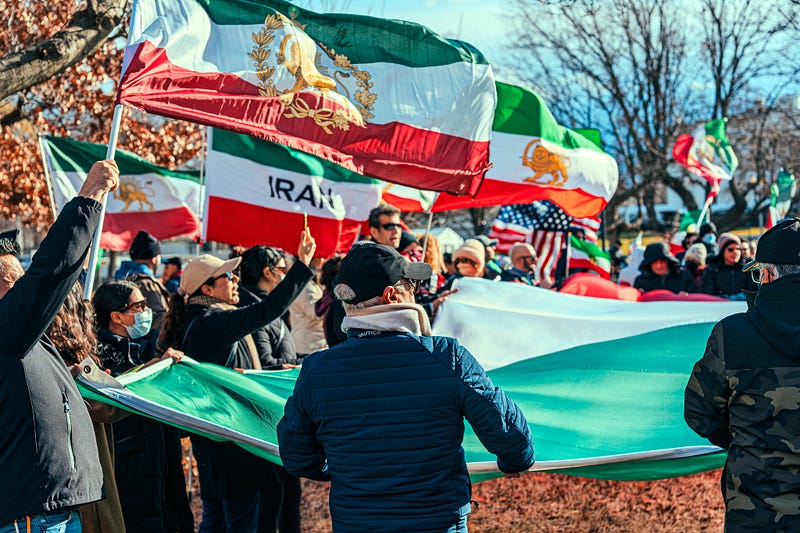
With 2026 only just begun, Iran is once again convulsing with mass protest. Streets filled. Shops shuttered. Security forces deployed. Internet cut. The imagery is familiar by now — but the context is not. What’s unfolding in Iran today feels less like another flare-up and more like a stress test of a regime that has been quietly losing strength on multiple fronts for years.
The immediate spark, as usual, is economic. Inflation is crushing Iran’s working class. The rial has collapsed into near parody. Food prices have detached from wages. Savings have evaporated. Ordinary Iranians are being told — yet again — to endure hardship for the sake of national resistance. That message used to work. It no longer does.
But this moment can’t be understood as a simple bread riot.
The anger runs deeper because the Islamic Republic enters this crisis weaker, more exposed, and more psychologically cornered than at any point since 1979.
Three forces matter here: the strategic defeat of Iran’s regional proxy terror network, the unfinished revolution sparked by Mahsa Amini’s death, and the unmistakable signal sent when the United States removed Nicolás Maduro from power in Venezuela.
Start with the region. For decades, the Iranian regime justified its internal repression and economic sacrifices by selling itself as the backbone of an “axis of resistance.” Hezbollah, Hamas, militias in Iraq and Syria — these were supposed to be proof that Iran was strong, feared, and ascendant.
October 7 and its aftermath shattered that illusion. Israel didn’t just retaliate; it systematically degraded Iran’s terror infrastructure across multiple theaters. Tehran watched its proxies exposed, penetrated, and in some cases neutralized outright.
Inside Iran, this mattered more than many outside observers realized. Iranians have long resented the regime’s habit of exporting revolution while importing poverty. Seeing billions spent abroad while domestic infrastructure crumbles has been a running grievance for years. Israel’s domination of Iran’s proxy network didn’t just weaken Tehran militarily; it stripped away the regime’s narrative of competence. Power that looks performative is fragile. Power that fails visibly is worse.
That erosion of prestige collided with a society already transformed by the protests following the killing of Mahsa Amini in 2022.
Those demonstrations didn’t overthrow the regime — but they broke something far more important: fear. Woman, Life, Freedom wasn’t a single uprising. It was a cultural rupture. It taught a generation of Iranians that mass dissent was possible, that slogans once whispered could be shouted, that the morality police were not untouchable gods but armed bureaucrats who could be challenged.
The regime survived that wave by brute force. But survival came at a cost. Every crackdown teaches people something. In Iran’s case, it taught millions that the system has no reform path left. Hijab protests became labor protests. Gender protests became economic protests. Moral outrage hardened into political clarity. Today’s demonstrators are not asking for better management. They are questioning the legitimacy of the entire structure.
That brings us to Venezuela.
Donald Trump’s decision to remove Nicolás Maduro sent shockwaves far beyond Caracas. For Iran’s leadership, it was a flashing red warning light. Tehran and Caracas had built a quiet partnership rooted in sanctions evasion, oil swaps, and mutual defiance of the U.S.-led order. More importantly, Venezuela represented proof that authoritarian regimes could outlast Western pressure indefinitely — if they were ruthless enough.
That illusion collapsed overnight.
The lesson Tehran took from Maduro’s fall was not subtle: isolation does not guarantee survival; stubbornness is not strategy; and when legitimacy evaporates and the economy implodes, foreign protection may not arrive in time. The regime’s increasingly frantic rhetoric about foreign plots and CIA orchestration isn’t just propaganda.
That’s fear talking.
That fear helps explain the severity of the current crackdown. Internet blackouts aren’t about controlling narratives anymore; they’re about preventing coordination. Mass arrests aren’t about deterrence; they’re about buying time. The regime understands that it is now confronting not a single grievance but a convergence of failures — economic, strategic, ideological.
So are the conditions right for revolution?
Regimes sometimes fall when they appear strongest, and sometimes survive when they seem finished. Iran’s security apparatus remains cohesive. The Revolutionary Guard still controls key industries and weapons. There is no unified opposition leadership waiting in the wings. These facts matter.
But so do other facts. The regime’s ideological currency is spent. Its regional strategy has backfired. Its economy is structurally broken. Its population is younger, angrier, and less religious than the system governing it. And for the first time, Tehran’s rulers can no longer convincingly argue that time is on their side.
Revolutions rarely announce themselves cleanly. They arrive disguised as strikes, protests, funerals, blackouts. They stall, retreat, and return. What makes Iran different now is not the scale of the protests — it’s the brittleness of the regime facing them.
This may not be the final act. But it feels like the end of the middle. The Islamic Republic is no longer merely suppressing dissent; it is defending a story about itself that fewer Iranians believe with each passing day. And once a regime loses its story, it eventually loses everything else.
(Contributing writer, Brooke Bell)